
Guide · Updated 10 August 2026 · 6 min
How to make a B2B website legible to buyers and AI answer systems
What to publish, structure and test when buyers use both search engines and AI answers to research a B2B product.
First-pass estimate: One day for an initial audit
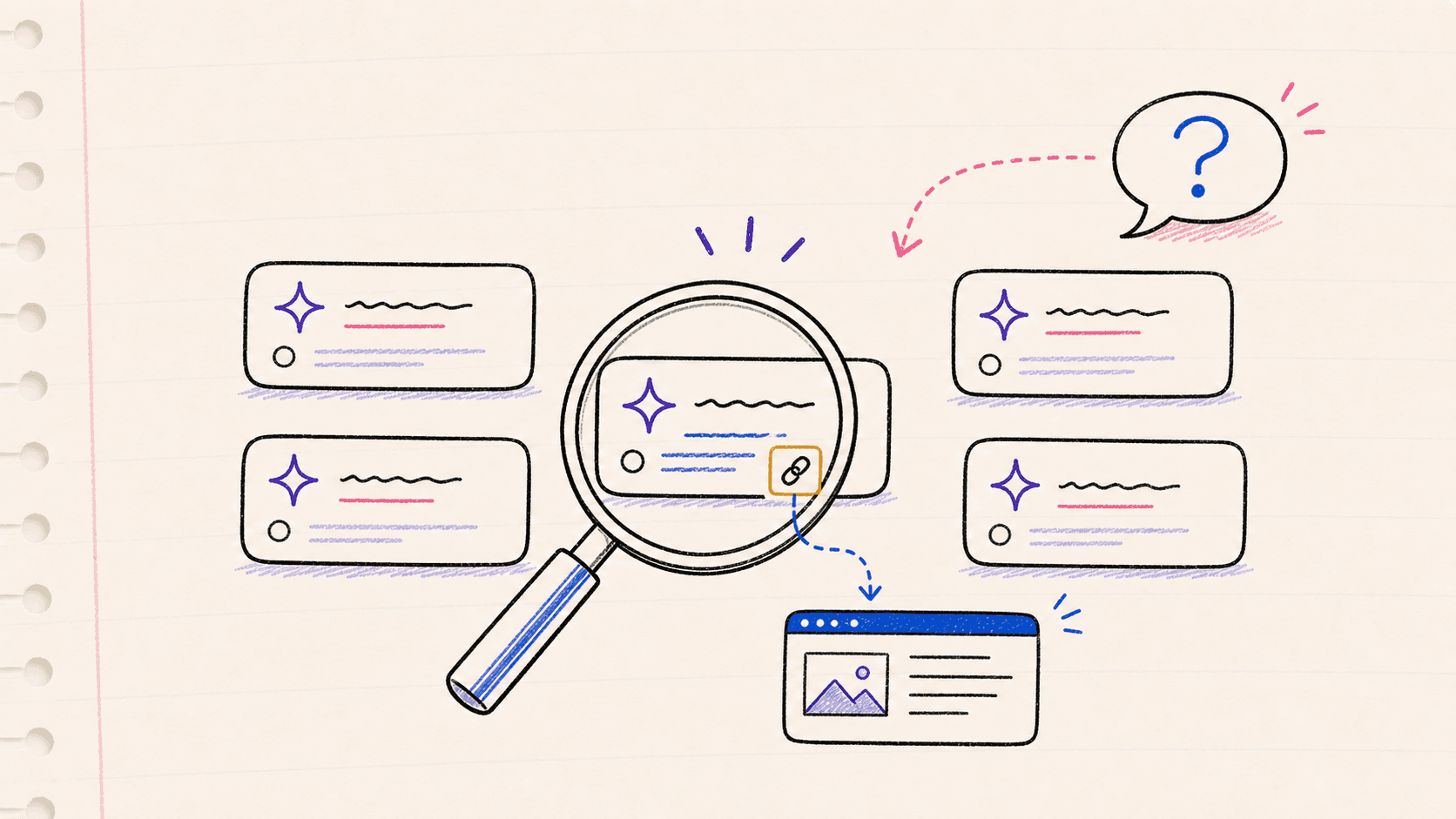
If a buyer has to open a PDF, decode a slogan and combine three product pages to understand an offer, an answer system faces the same problem. It may find the site and still fail to work out who the product suits, what it does or which claims it can safely repeat.
Fix the pages before chasing an “AI optimisation” layer. Put the company, product, audience, use case, evidence and limitations into accessible page content. Crawler controls and structured data help systems reach and interpret that content; neither can secure a recommendation.
Diagnose the site with six questions
For this audit, “AI-ready” has a narrow meaning. An authorised system should be able to reach the public page, identify the company and product, retrieve specific facts, separate claims from their limits, recognise the current canonical page and send a person somewhere useful for verification.
Google says supporting links in its AI search features must be indexed and eligible to appear with a snippet. It requires no special AI file or schema. Its published guidance still centres on accessible pages, useful internal links, visible text and structured data that agrees with the page. See Google’s guidance for AI features and websites.
1. Can the important page be reached?
For each priority page, check the final status code, canonical URL, robots directives, rendered HTML, sitemap inclusion and internal link route. Test the important assets too. A page that is technically crawlable but absent from answers may have an indexing, relevance, content-quality or internal-link problem; inspect those before adding speculative files or markup.
Look at the initial HTML, not only the browser after it has run JavaScript. Product names, audience, use cases, specifications, evidence, limitations and dates should appear in semantic HTML. If a client-rendered specification is missing, render the essential data on the server and retest the response.
Authentication and a web application firewall protect private material. robots.txt does not.
2. Can a buyer answer the important questions from one clear source?
Take questions from sales calls, customer research, support and search data:
- What is the product, and who is it designed for?
- Which situations make it a good or poor fit?
- What does it do, and what evidence supports the important claims?
- Which alternatives, limits and implementation requirements matter?
- Where can the buyer verify the answer or take the next step?
Trace every priority question to an owned canonical page. A model should not have to decode a slogan, navigation label or PDF filename to assemble the answer.
For an air-conditioning supplier, “high-performance climate solutions” tells a buyer very little. A useful product page may need capacity, suitable room size, energy-efficiency rating, noise level, operating-temperature range, dimensions, installation requirements, warranty, regional availability and the date each specification was verified. Publish those facts as visible text with consistent labels. Build pages around the choices people make: product comparison, building type, climate constraint, installation scenario, energy priority and maintenance requirement.
3. Do names, claims and machine-readable data agree?
Check company, product and service names across the site. Link products to their categories, use cases, evidence, documentation and organisation. Explain genuine synonyms; fix silent naming drift.
Inspect each consequential claim beside its mechanism, evidence, source or qualification. Add the date and owner where freshness matters. If a result applies only to one segment, configuration or region, put that limit next to the claim. When a model repeats an old fact, correct the canonical page, remove contradictions from other pages you control and record the error in the audit baseline.
Structured data must tell the same story as the visible page. Use Organization, Person, Service, Product, Article or another vocabulary only when the content supports it. Give entities stable identifiers and consistent URLs. Syntax validation cannot strengthen a weak claim. If markup disagrees with the page, fix the source content and generation logic rather than preserving a hidden version for visibility. Google’s Product structured-data documentation applies the same principle to product markup, prices and ratings.
4. Does crawler policy distinguish search, training and user-directed access?
“AI crawler” covers several jobs. OpenAI documents OAI-SearchBot separately from GPTBot, while Anthropic publishes distinct search, training and user-directed agents. Check current vendor documentation before writing policy: OpenAI crawlers and Anthropic crawler controls.
A company may welcome search retrieval, decline model training and keep private documentation behind authentication. If a training opt-out also blocks desired search discovery, revisit the vendor’s documented agent distinction. If an unauthorised crawler ignores policy, enforce the boundary at the server or network layer.
5. What do answer systems actually say?
Run a fixed set of buyer questions in the products relevant to the market. Record mentions, descriptions, recommendations, cited sources and factual errors separately. Repeat important questions under documented conditions. One answer remains one observation, not a ranking.
AI can help inventory pages, extract product facts and spot inconsistent names or dates during the audit. Audience priority and claim approval remain editorial and commercial decisions.
6. Does the visibility lead anywhere useful?
Keep identifiable referrals and inspect their landing pages. Ask new enquiries in open text how they heard about the company; some AI-assisted research will never produce a clean referral. Review qualified behaviour alongside the visibility record instead of treating a higher mention count as the commercial outcome.
Keep a one-page audit record with the priority questions, canonical pages, crawler policy, systems tested, dates and test conditions. Give each factual error an owner who can correct its source. Then rerun the same questions after the pages change.
For the full measurement method, read How to measure whether AI search recommends your company. If the site needs to be restructured and written around these findings, see Buyer- and AI-Ready Websites.